People

Faculty

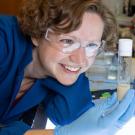
Kassandra Ori-McKenney

  • Associate Professor
  • Department of Molecular and Cellular Biology
  • College of Biological Sciences
Kassie Ori-McKenney seeks to understand the pathways and proteins that regulate microtubule cytoskeletal dynamics and microtubule-based transport during neuronal development and maintenance. Researchers in her lab use a variety of in vitro, in vivo, and ex vivo techniques to  delve into the complex processes that depend on microtubules.

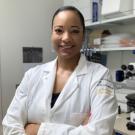
Crystal Rogers

  • Assistant Professor
  • Department of Anatomy, Physiology, and Cell Biology
  • School of Veterinary Medicine
Crystal Rogers examines how genetic and environmental changes affect early developmental processes in vertebrate embryos. Specifically, her lab studies embryos from two research organisms, chickens and amphibians, to identify the factors that are necessary and sufficient to drive the formation and differentiation of neural crest cells. Rogers and her students seek to understand the normal mechanisms that control the development of these cells and also to understand how environmental exposures can negatively affect development causing disorders such as cleft palate, peripheral nerve defects, albinism, and others.


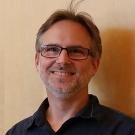
David Segal

  • Professor
  • Department of Biochemistry and Molecular Medicine
  • School of Medicine
David Segal studies the genetics and epigenetics of neurological disorders and cancer. A guiding principle for the lab has been to study how nature does what it does, then attempt to use that knowledge to make useful tools to improve public health, either through increased knowledge or therapeutic intervention. Specific research foci in the Segal Lab revolve around engineering zinc finger, Transcription Activator-like Effectors, and CRISPR/Cas nucleases and transcription factors.

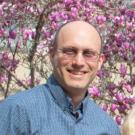
Mitch Singer

  • Professor
  • Department of Microbiology and Molecular Genetics
  • College of Biological Sciences
Mitch Singer focuses on understanding how Myxococcus xanthus senses nutrient limitation and how this event initiates the developmental program. We have previously proposed a model whereby M. xanthus cells use their protein synthetic capacity to measure their nutritional status.  A signaling molecule known to couple amino acid availability with a variety of cellular processes in E. coli acts as a second messenger in this process by activating a variety of starvation responses.

Daniel Starr

  • Professor
  • Allen Distinguished Investigator
  • Department of Molecular and Cellular Biology
  • College of Biological Sciences
Daniel Starr and his lab study processes involved in the positioning of nuclei and other organelles to specific locations within a cell. They use the nematode Caenorhabditis elegans as a model organism, with genetic, biochemical, cellular, and molecular approaches to study this basic problem in cell biology and human disease.

Alumni at UC campuses

Chidera Alim

  • Howard University, 2017 (EEGAP)
  • PhD, Molecular, Cell, and Integrative Physiology, UC Davis, 2021
MCIP Representative to the UC Davis Graduate Student Assembly, 2019-2020, Member, UC Davis Chancellor’s Graduate and Professional Advisory Board, 2019-2020, mentor, ESTEME at UC Davis program

Naomi Becks

  • Fort Valley State University 2024 (NUTGAP)
  • Graduate Group in Nutritional Biology (Steinberg lab)
  • NSF Graduate Research Fellow

Alana Chaney

  • MS Fort Valley State University, 2021 (PABGAP)
  • PhD candidate, Nutrition, UC Davis

Nkechinyere Chidi-Ogbolu

  • Howard University, 2017 (ASBIGAP)
  • PhD, Biomedical Engineering, UC Davis, 2022
  • Consultant, Boston Consulting Group (BCG), San Francisco
MS Biomedical Engineering, UC Davis, 2019; Member, UC Davis Chancellor’s Graduate and Professional Advisory Board, 2019-2020; Mentor, ESTEME at UC Davis